
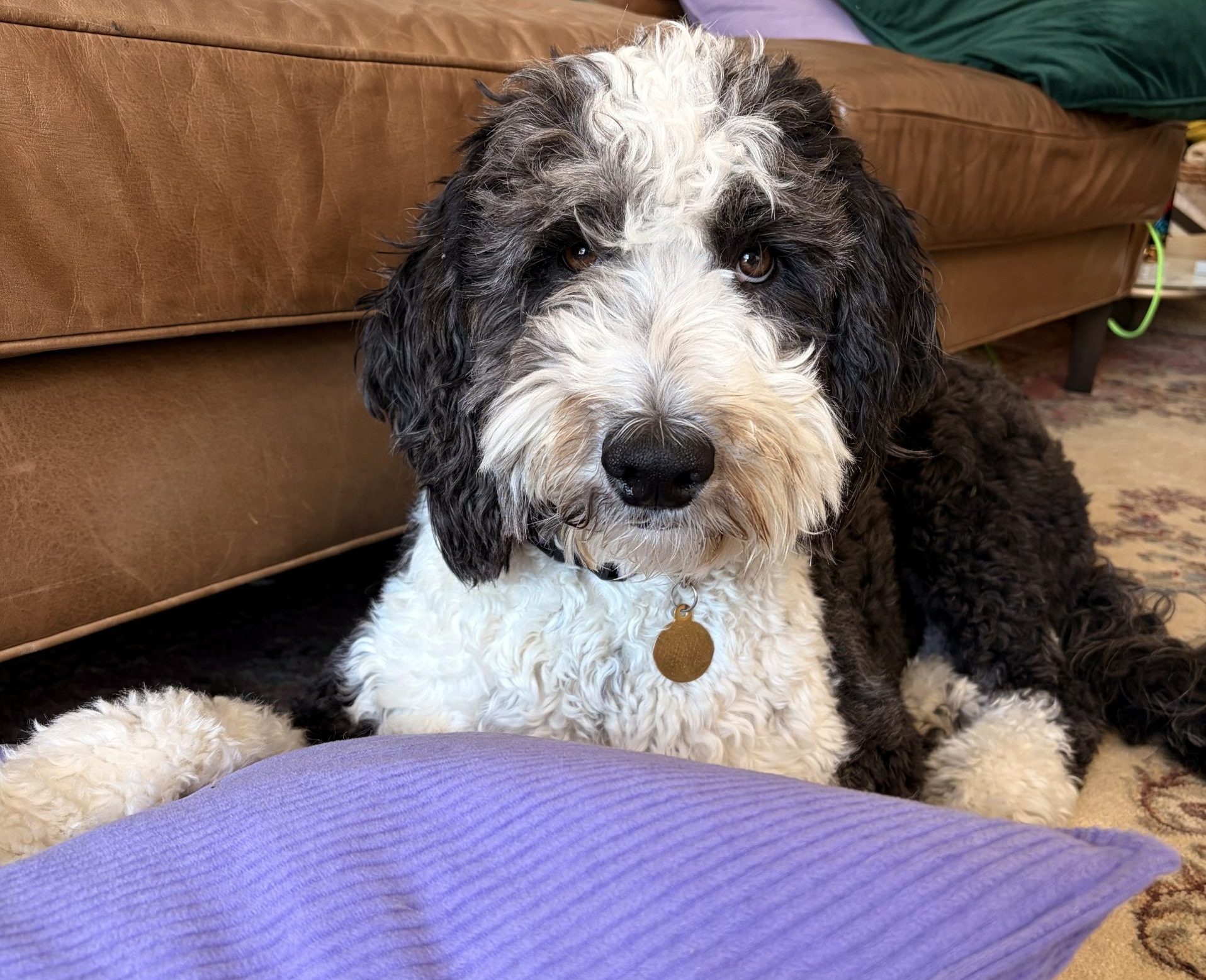
Separation anxiety… i’m willing to bet most of us as pet parents have dealt with this at some point. If we soothe our pet, we think it helps. If we ignore them, we think it might help. Yet it still continues and you’re left sitting there thinking “gosh, can I ever go on a vacation or go to work this week without worrying about Louie being anxious?!” I know, because I have a cat named Louie who most definitely struggles with this. Although I have cats, dealing with separation anxiety is pretty universal, and I have seen it plenty in dog clients I have worked with. Below I go into how/why dog walking and separation anxiety are more connected than most people realize.
What it is
Separation anxiety (SA) as defined by VCA Animal Hospitals “describes [behavior in] dogs that usually are overly attached or dependent on family members. They become extremely anxious and show distress behaviors such as vocalization, destruction, or house soiling when separated from the owners.” Separation anxiety are a set of behaviors which communicate to dog parents that their dog feels unsafe unless in the presence of their guardian. I think about it this way: your dog isn’t being dramatic. They’re genuinely scared, and they don’t have the words to tell you.
What’s actually happening
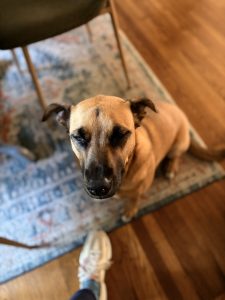
Separation anxiety in dogs isn’t as simple as bad behavior. It’s not a moral failing on your dog’s part or yours… it’s a genuine panic response. According to the ASPCA, dogs with separation anxiety become upset when separated from their guardians and can exhibit behaviors like: persistent barking, destructive chewing near exits, pacing, and attempting to escape. These behaviors often begin within minutes of being left alone. But I want you to consider that your dog isn’t “being Bad”, their nervous system is flooded, and they genuinely can’t settle. Get curious about why (which I know can be hard to do when you’re frustrated).
The hard part about this is that dogs don’t have the ability to reason through your absence. They can’t remind themselves that you come home every single day. What they can do is learn, through repetition and predictability, that the world is safe even when you’re not there. That’s where routine becomes really powerful, but is something you intentionally practice over and over again.
Why predictability matters more than you might think
Dogs are creatures of habit in a way that goes deeper than preference (I can relate to that). When their day is unpredictable (walks happen at random times, or not at all), their nervous system stays in a low-grade state of alert and stress. That means they’re always waiting, always listening, always unsure of what comes next… on edge and hypervigilant. That kind of ambient uncertainty is genuinely stressful for them, imagine if you felt that way every day?
A consistent dog walking routine does something quiet but important for separation anxiety: it gives the day a shape your dog can start to anticipate. When a walk happens at roughly the same time each weekday, that becomes an anchor point in your dog’s internal clock. They know it’s coming. The hours before it feel different than they did when nothing was predictable.
I’ve seen this play out with anxious dogs I walk regularly! The first few weeks, there’s some adjustment of course, which can look like a dog who watches the door, who paces, who takes a while to settle into the walk itself. By week three or four, something shifts, and they’re calmer at the door. They’re more present on the walk. The routine has started to do its work. Most dogs I walk now know the sound of me locking my car and I can hear their excitement or see them waiting for me at the window.
Walks aren’t a cure, but anchor their day
I want to be honest here: a consistent dog walking routine is not a treatment for separation anxiety on its own. If your dog is truly struggling (e.g. destructive, distressed, unable to settle for more than a few minutes after you leave) that deserves professional medical support. A Certified Separation Anxiety Trainer (CSAT) or a veterinary behaviorist can help you build a desensitization plan tailored to your specific dog. Your vet is also worth talking to, as medication can be a genuinely useful tool alongside behavior modification for moderate to severe cases.
What routine can do is reduce the daily baseline of stress your dog is carrying. The ASPCA notes that providing regular physical activity and mental stimulation is a vital part of addressing anxiety-related behavior, and that a dog who is physically and mentally tired has less excess energy to spend in distress. A midday walk doesn’t just get your dog outside. It breaks up the long stretch of alone time, provides enrichment, sniffing and movement, and deposits something positive into the middle of their day. I’m a huge proponent of letting your dog sniff, it often is more important than the distance of your walks.
So overall, a routine anchored to your dog’s day like a recurring walk, leads to less accumulated stress going into treatment which means treatment tends to go better.
What this looks like in practice
If your dog struggles with being alone, here are a few things that tend to help alongside a consistent walking routine:
- Keep arrivals and departures low-key. Big hellos and dramatic goodbyes can actually heighten the contrast between “you’re here” and “you’re gone,” which makes the transition harder. A calm, matter-of-fact goodbye and a quiet hello when you return helps. I know this is tough, I struggle with it too.. but try it!
- Try to exercise your dog before a longer absence when you can. A walk before you leave for work, followed by a midday walk from a dog walker, gives them two opportunities to decompress rather than one.
- Notice the patterns. Does your dog start to pace when you pick up your keys? Show stress when you put on your shoes? Those pre-departure cues are worth paying attention to. A trainer can help you work through them systematically.
And if you’re not able to be home for your dog’s midday walk yourself (whether because of work, commute, appointments, or just a packed day) a consistent dog walker who shows up reliably at the same time, with the same calm energy, becomes part of that routine too. Not a replacement for training, but a real support for it.
The TLDR (too long didn’t read)
Separation anxiety is hard. It’s hard for the dog, and it’s hard for you. But predictability is one of the most underrated tools in managing it. A consistent dog walking routine in Redwood City, San Carlos, Emerald Hills or wherever you are won’t fix everything. But it genuinely helps your dog feel more settled, more secure, and less like every departure is a mystery they have to survive.
If you’re local to Redwood City and looking for a dog walker who understands anxious dogs, is Fear Free Certified, and takes routine seriously, I’d love to connect.
Reach out to me so we can assess what your dog needs, and what you need to support your dog.