
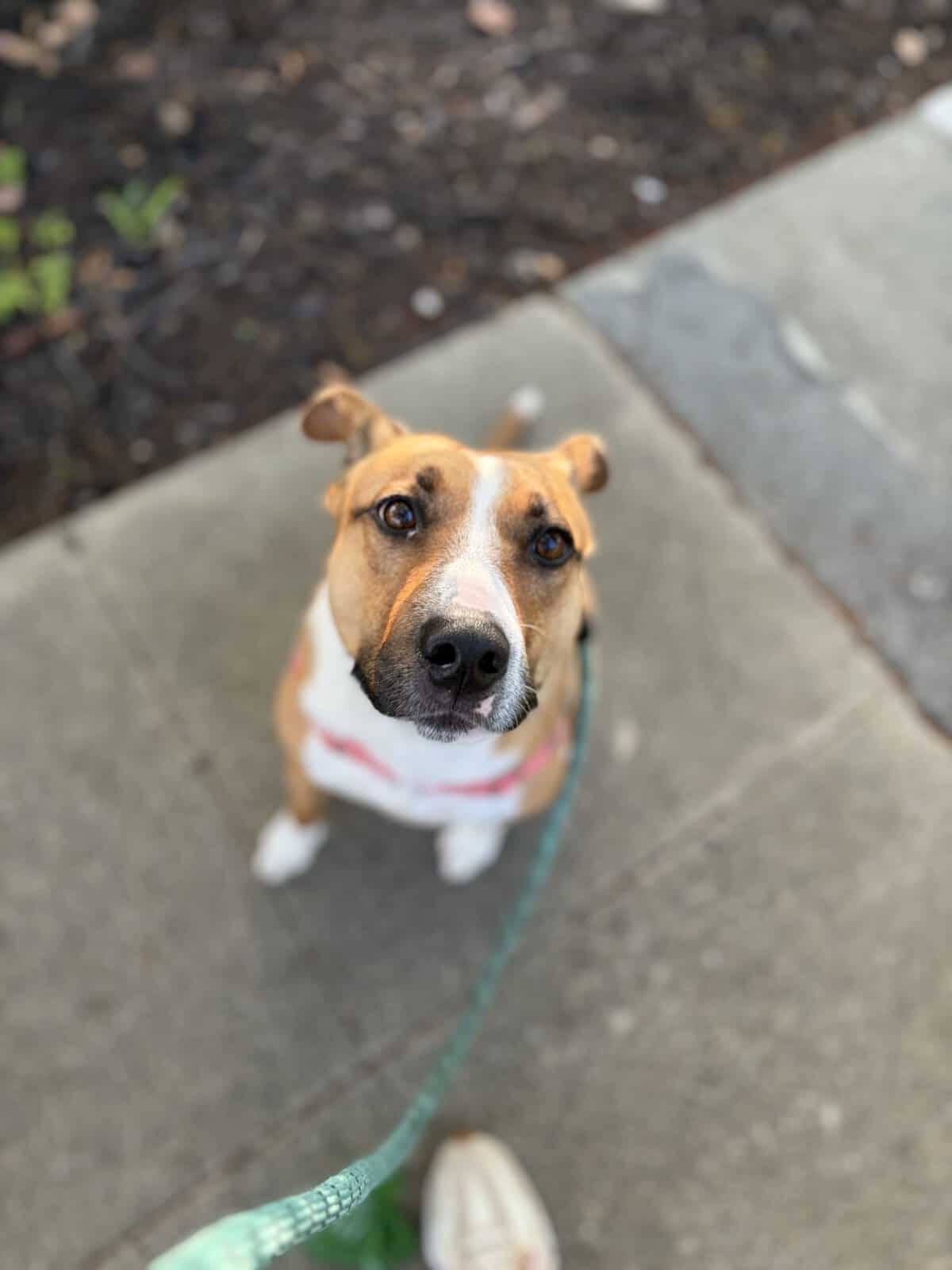
As a reactive dog walker in Redwood City, my answer is always the same: of course they can! And they need to be.
Walking isn’t optional for a reactive dog. But I understand exactly what you’re thinking: “What am I supposed to do? We barely make it down the block before the barking starts, or the cowering, or the lunging at nothing I can even see.” I hear you, but here’s the thing… it isn’t something that gets fixed overnight. It isn’t something a trainer is going to magically resolve. And a lot of it is genuinely outside your control. What IS in your control is how you respond to them in the moment.
So what does reactive actually mean?
As a dog walker in Redwood City, I can tell you that most of the dogs I work with are what someone would call reactive. What that actually means is that your dog is having a real emotional response to something that might seem pointless to you. It isn’t pointless to them. Your dog has their own history, genetics, memories, and socialization experiences that all contribute to how they move through the world. At its core, reactivity is communication. Your dog is telling you something.
That communication is what guides everything that comes next. Body language matters enormously, before a trigger, during it, and after. Last week I was walking a dog and glanced at my phone for a few seconds to add a note to her report card. At that moment she lunged. A cat had appeared right in front of us out of nowhere. Because I knew her well, I was able to redirect immediately and keep everyone safe. That knowing is built over time and repetition. You cannot speed that process up, and I think that’s the most frustrating part for most pet parents.
The only thing worth remembering is that everyone has bad days, including your dog. It is okay to feel frustrated, worried, and exhausted by it. Just try not to live there.
What to look for in a walker for a reactive dog
Not every dog walker is a good fit for a reactive dog, and that matters. What you want is someone who observes before reacting, who keeps walks calm and predictable, and who actually knows your dog well enough to read them before a trigger escalates. That takes time and consistency. It also takes someone who isn’t going to handle eight dogs at once and call it a walk.
I recently completed my Fear Free Pet Sitter certification, which focuses specifically on reducing fear, anxiety, and stress in animals during care. It is something I was already bringing into my work, but having the formal training behind it means I can be more intentional about it with every dog I work with.
You might just need a break
Sometimes the most honest thing I can offer is this: you might just need someone to take the leash for a while. Not because you are failing your dog. But because sometimes a consistent, calm presence from someone who isn’t emotionally tangled up in it can actually help. Dogs read stress. They just do.
A reactive dog’s progress often looks a lot like their sniffing on a walk: zig zaggy, seemingly random, occasionally maddening. But sniffing is not a problem to solve. It is a need. So is the walk itself. It’s a part of the journey and when you see the progress, it is truly incredible!
If you have a reactive dog and you’re not sure where to start, I would love to meet you both. Reach out anytime.