
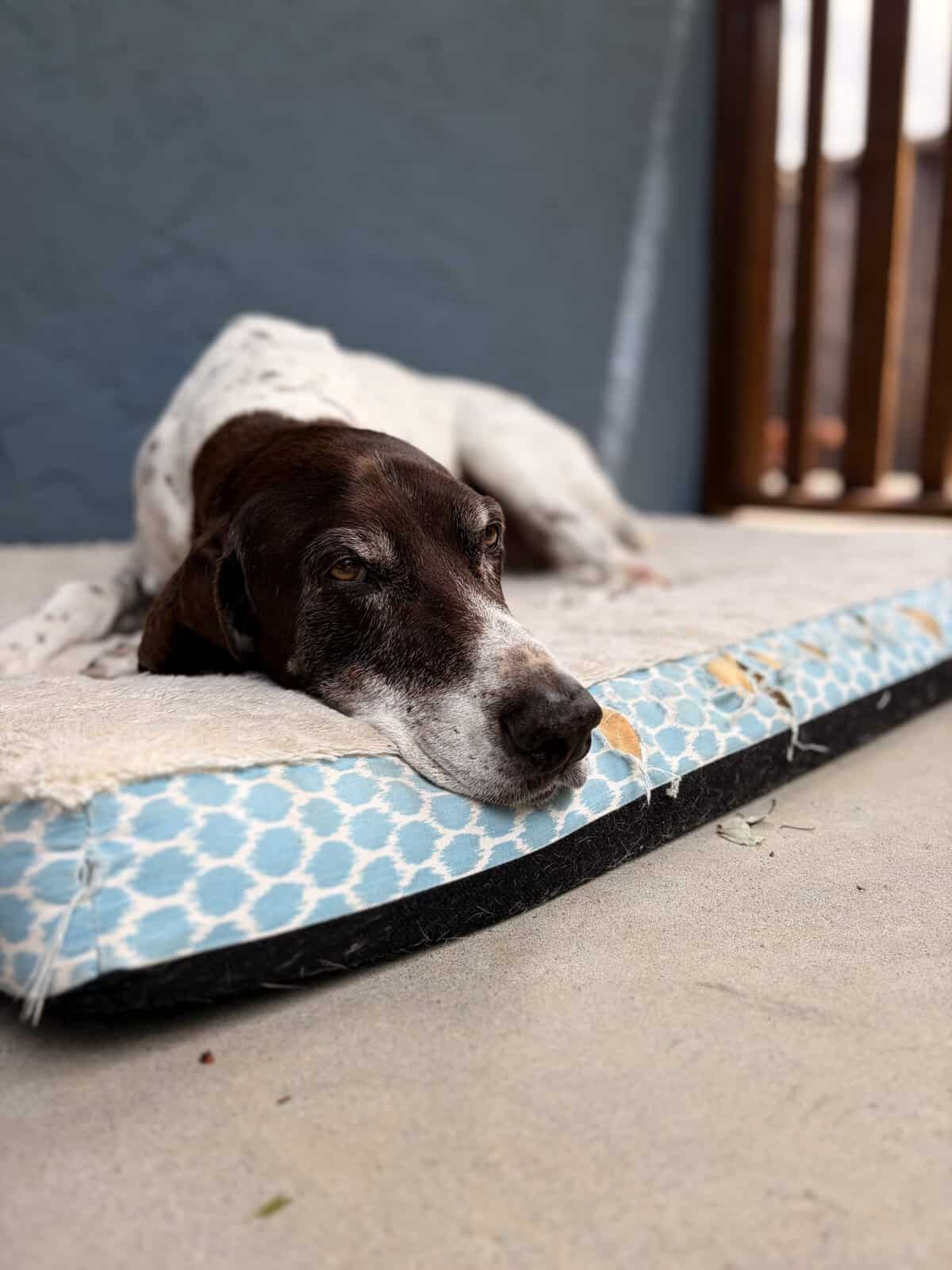
If you have a senior dog, and you’ve ever left them with a sitter, you know the specific kind of worry that doesn’t really go away while you’re on vacation. It’s a different kind of worry from the worry you had when they were younger. With a young dog, you’re mostly hoping they don’t chew the wrong thing or run out of your garage. With a senior, you’re hoping the sitter will notice if something changes: the cough that wasn’t there yesterday, the slower walk to the water bowl, the way they’re holding a back leg a little differently.
The thing you’re really asking when you hire someone is: will you notice what I’d notice?
I’m writing this from night 5 of a 9-night senior dog overnight care stay with Kimo, a 15-year-old German Shorthaired Pointer. At 15, he still gets 4 walks a day! In the early mornings he quite literally launches himself down one step in the garage he’s that excited for his first walk each day. I think this routine is what keeps him going, and it’s amazing. Suffice it to say he’s got a pretty regimented schedule for a senior dog.
What senior dog care actually looks like (when it’s done well)
For seniors, it isn’t just longer naps and shorter walks… The real work is pattern recognition. It’s knowing what’s normal for THIS dog so you can spot what isn’t.
Examples: sleep position, breathing rhythm at rest, appetite changes day to day, how long it takes them to get up from the bed, water consumption, whether they’re tracking you with their eyes the way they did yesterday.
Of course it takes a minute for each of us to get used to one another. What amazes me so much about Kimo thus far is how spry he is. I mentioned he gets four walks a day, but his nose still works incredibly well. So much so that on the first night he definitely wanted to try to steal some of my dinner!
But by night five, I now know what’s normal in terms of his eating habits, potty habits, and that he will 100% keep me to his walk routine and let me know if we’re running well behind schedule.
The Fear Free piece
Senior dogs accumulate fear, anxiety, and stress signals that look like “normal old dog stuff” but aren’t. Pain can often read as withdrawal, cognitive decline can read as anxiety.
Most sitters miss these because they don’t have the training to catch them. That’s what my Fear Free certification specifically addresses. For seniors specifically, having this certification helps me to be fully attuned to the signs.
Fear Free trains sitters in body language, behavior, enrichment, medication, and more, with the goal of helping them “offer top-level Fear Free care to pets and provide owners with basic support and advice.” For senior dogs specifically, the body language piece is where most of the work happens. It’s where you catch things that look like normal old dog behavior but aren’t.

The cooperative care principle
Seniors have earned the right to opt out of things. Pushing them through routine when they don’t want it is the wrong move. So for me, it’s about letting them lead… Asking, not telling.
For example if you live in Redwood City you know the last three days have been abnormally hot for early June. That meant that we had to skip at least one of his four daily walks for the past two days. Did he tell me about it? Yes, he’s very routine oriented so he knew the routine had shifted. But it’s what was safest for him, especially at age 15.
What listening to his cues also looks like is me looking for and watching when he needs to go out. His parents let me know that often he will want to go out to potty in the middle of the night, totally fine. But there has been at least two nights where he didn’t indicate or let me know he had to, so I don’t force it.
Why the home environment matters specifically for seniors
Familiarity reduces stress. I know it does for me, so think about it a little. You probably wouldn’t like to go to a boarding facility if you were your dog. I genuinely believe that most dogs don’t.
Predictability reduces cognitive load. Their bed, their smells, their corner, the same window. For senior dogs especially, the cost of being somewhere unfamiliar (boarding) is much higher than for a younger dog. Continuity of routine matters more in the last few years than at any other stage.
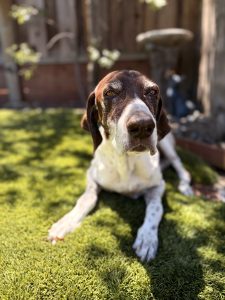
Overnight Pet Sitting for a Senior Dog: The Middle-of-the-Night Reality
The honest piece. Senior dogs often come with medication schedules that can’t be missed or shifted. Overnight care for a senior is different from overnight care for a young dog because the responsibility doesn’t pause when you go to sleep. Listening for changes in breathing, 1am or 4am bathroom trips,… knowing what sounds are normal for them versus what should wake you up.
That is what my complex overnight care for seniors is all about. It’s about knowing that for a senior dog like Kimo, his routine and his ability to be able to have a reliable person with him is what will make him safest, and his parents relax on their vacation.
When overnight pet sitting for a senior dog is right (and when it isn’t)
For most senior dogs, the home is the right place.
For dogs with severe medical complexity, sometimes the right call is a vet-supervised boarder. This will depend on you knowing your dog well enough to determine the level of care best for them! Because you deserve a vacation where you can relax knowing that your dog will be well taken care of, and that your home will be respected.
The reason families call me specifically for senior care isn’t because I’m cheaper or more convenient. It’s because they’re hiring me specifically to do the work. Kimo’s parents knew that going in, and that’s why they can actually relax on their trip.
If you’re heading into a vacation and you’ve been losing sleep over leaving your senior dog, let’s talk. The first call is free.
Senior dog overnight care: questions I hear most
Should I board my senior dog or hire a sitter for overnight care?
For most senior dogs, staying home with a sitter is significantly less stressful than going to a boarding facility. Their routines, smells, and bed all stay the same, which matters more in the senior years than at any other stage of life. The exception is dogs with severe medical complexity who genuinely need vet-supervised care.
Can a senior dog handle overnight pet sitting?
Yes, and in most cases they handle it better than they would handle being moved to a new environment. The key is having a sitter who pays attention to their routine and can recognize subtle signs of discomfort or change.
How do you handle medications for senior pets?
Medications are part of every consultation. I confirm the schedule, the dose, the method (with food, on an empty stomach, etc.), and watch for any side effects through the stay. For dogs with complex medication routines, I recommend my Complex Overnight Care tier.
How do you know if a senior dog is uncomfortable or in pain?
Through my Fear Free certification, I’m trained to read body language signals that often look like “normal old dog behavior” but actually indicate fear, anxiety, or stress. Sleep position changes, hesitation before standing, reluctance to eat, and slowed responsiveness are all things I watch for night by night.
Do you work with dogs that have mobility issues?
Yes. My approach for senior dogs with mobility challenges is to follow their lead. Shorter routes, slower pace, optional walks on hot days. Kimo, the 15-year-old in this post, taught me a lot about reading those cues in real time.